English
 Vietnamese
 Italian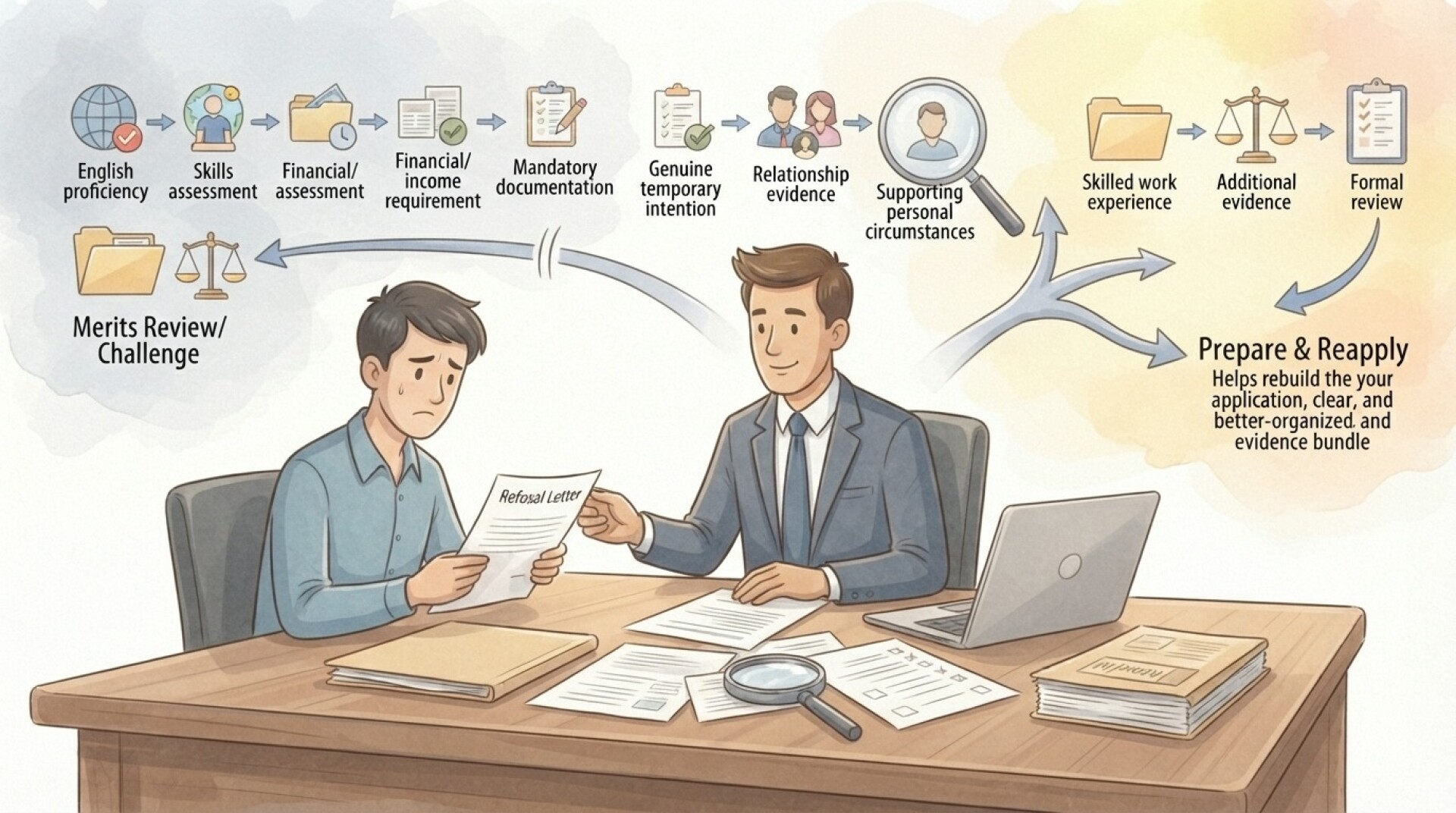
What To Do When Your Visa Application Is Refused
Understanding why visas are refused, what your options are, and how to protect your future applications.
Visa refusals are distressing, costly, and often unexpected. Many applicants believe they have provided enough evidence, only to receive a refusal letter that turns their plans upside down. The good news is that a refusal is not always the end of the road—but understanding why visas are refused is the first step to fixing the problem.
- Why Are Visa Applications Usually Refused?
Visa refusals generally fall into two categories:
- Objective Criteria Not Met
These are requirements where the decision maker has no discretion. Examples include:
- English language proficiency
- Skills assessment outcomes
- Minimum income thresholds
- Mandatory documentation
If these criteria are not met, the visa must be refused.
- Subjective Criteria Not Satisfied
Many visas rely on the decision maker’s judgement. These include:
- Genuine Temporary Entrant (GTE) for student and visitor visas
- Genuine and continuing relationship for partner visas
- Relevant skilled work experience for skilled visas
- Fear of persecution for protection visas
In these cases, the strength of your evidentiary bundle determines the outcome. Weak, inconsistent, or poorly presented evidence leads directly to refusal.
- The Role of Evidence: Weak Bundles = High Risk
A large percentage of visa refusals occur simply because:
- Evidence is incomplete
- Documents contradict each other
- Statements are unclear
- The application is poorly organised
Decision makers are under time pressure. If your application is messy or confusing, they will refuse it.
- Can You Appeal a Visa Refusal?
Many visa refusals can be challenged through merits review at the Administrative Review Tribunal (ART).
Merits Review Facts (August 2026):
- Cost: $3,580.00
- Timeframe: 18–24 months
- Success rate: 44% of refusals overturned
One major advantage of merits review is that you can submit new evidence that was not included in your original application. This often improves your chances—especially when the refusal was based on weak or incomplete documentation.
But not all refusals can be appealed.
For example, Visitor Visa Subclass 600 (Tourist Stream) refusals cannot be reviewed at the ART.
These refusals are often based on nationality‑based risk profiles and assumptions about overstaying or working illegally.
- Real Case Example: When Logic Doesn’t Matter
Case Study: “Ms Hang” (name changed)
- Vietnamese national
- Married to a U.S. citizen
- High income, excellent career
- Strong travel history
- Preparing to relocate to the USA
Her Subclass 600 Visitor Visa was refused.
The decision maker—also Vietnamese—claimed she was likely to abandon her career, family, and future in the USA to work illegally in rural Australia for $10 per hour.
This refusal was irrational, but because tourist visa refusals cannot be appealed, her only option was to reapply with a stronger evidentiary bundle.
This case highlights a harsh truth: Decision makers sometimes refuse applications based on personal bias or assumptions.
- Should You Appeal or Reapply?
Merits review is not always the best option, especially when:
- Your original application was poorly prepared
- Evidence was missing
- Your statements were unclear
- You misunderstood the visa criteria
In these cases, it is often better to prepare a new, stronger application rather than spend thousands of dollars and wait two years for an ART decision.
- How a Migration Consultant Can Help
An experienced migration consultant can:
- Identify exactly why your visa was refused
- Build a stronger evidentiary bundle
- Correct errors from your previous application
- Prepare clear, persuasive submissions
- Reduce the risk of another refusal
- Advise whether reapplying or appealing is best
At Chess Migration, we work out a tailored plan for your situation. Our professional fees are modest compared to the cost of a refusal:
- Visitor visa: from $500
- Skilled visa: from $1,500
This is far cheaper than losing your visa fee, waiting years for review, or facing another refusal.
Final Thoughts
A visa refusal is not the end—it is a warning that something in your application needs to be fixed. With the right guidance, evidence, and strategy, you can turn a refusal into an approval.
Disclaimer
The above does not constitute migration advice. The law, though correct at the time of publication, may change. This information is intended as general guidance and may not meet your specific situation. Always seek the advice of a professional migration consultant.