

 English
 Vietnamese
 Italian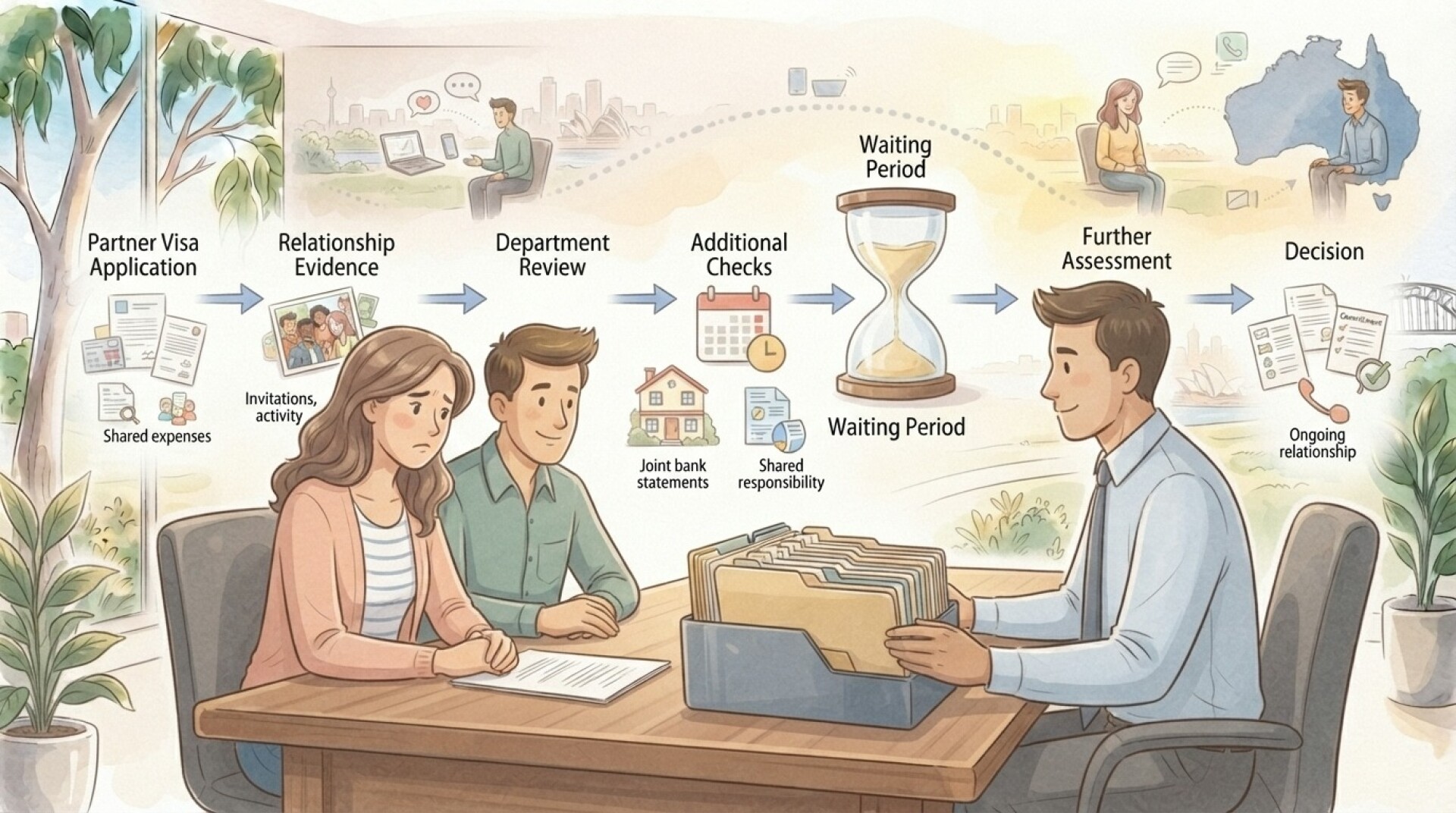
The Truth About Long Processing Times for an Australian Partner Visa
Why partner visas take years, what causes delays, and how to protect your application.
Australian partner visas are among the most emotionally challenging visas in the migration program. Couples expect a fair and efficient process, yet many are shocked to discover that partner visas can take 17 months for 50% of applicants and up to 39 months for 90% of applicants. These delays separate families, create financial strain, and cause significant distress.
This article explains why partner visa processing times are so long, what the Department of Home Affairs prioritises, and how Chess Migration can help you avoid unnecessary delays.
- Partner Visa Processing Times: The Reality in 2026
Current processing times for partner visas in Australia:
- Subclass 820 (Onshore Temporary): 14–16 months
- Subclass 801 (Onshore Permanent): 18–30 months after 820 grant
- Subclass 309 (Offshore Temporary): 17–19 months
- Subclass 100 (Offshore Permanent): 18–30 months after 309 grant
For most couples, the full journey from temporary to permanent residency takes 3–5 years.
- Offshore Partner Visas Are Deliberately Deprioritised
Partner visas can be lodged onshore or offshore. Under Ministerial Direction, offshore partner visas (Subclass 309/100) are given lower processing priority.
This means:
- Couples lodging offshore are kept apart longer.
- Onshore applicants often move through the system faster.
- Offshore applicants face extended waiting times even when their evidence is strong.
This prioritisation has been criticised by migration experts because it delays family reunification for thousands of couples.
- Are Partner Visa Caps Legal? Experts Say No — But Delays Achieve the Same Result
There is widespread agreement among legal professionals that capping partner visa numbers is unlawful, because partner visas are demand‑driven and not subject to migration quotas.
So how does the Department manage numbers?
By slowing down processing.
Approximately 40,000 partner visas are approved each year. The remaining applications are pushed into the next year’s backlog. As the backlog grows, processing times increase annually.
This is why partner visa waiting times rarely improve — they simply roll over into the next migration year.
- The Four Pillars of a Genuine Relationship
To be granted a partner visa, you must prove your relationship is genuine and ongoing. The Department assesses four key pillars:
Financial Aspects
- Joint bank accounts
- Shared bills
- Assets or liabilities
Social Aspects
- Recognition of the relationship by friends and family
- Photos, social events, declarations
Household Aspects
- Living arrangements
- Shared responsibilities and daily chores
Commitment to Each Other
- Long‑term plans
- Communication records
- Evidence of emotional support
If your evidentiary bundle is incomplete, messy, inconsistent, or hard to follow, expect:
- Requests for further information (RFIs)
- Significant delays
- Possible refusal
- Why Self‑Representation Often Leads to Delays or Refusal
Many applicants believe they can manage the partner visa process themselves. Unfortunately, partner visas are among the most complex family visas in Australia.
During my time working with the Department, I saw countless applications fail because:
- Evidence was poorly organised
- Key documents were missing
- Relationship statements were unclear
- Applicants misunderstood legal requirements
The result?
- Long delays
- Stress and frustration
- Visa refusals that could have been avoided
- The Cost: Partner Visa Fees Increased by 15%
The visa application charge recently increased by 15%, now costing:
- $11,710 AUD for the main applicant
- Additional fees for each dependent
This makes partner visas one of the most expensive visas in the Australian migration program.
Long delays combined with high fees create enormous pressure on couples.
- Does the Department Care About the Impact on Families?
In short: No.
The Department’s focus is administrative efficiency, not emotional wellbeing. Long processing times can cause:
- Distress
- Financial hardship
- Relationship breakdown
- Mental health strain
Yet the system continues unchanged.
- How Chess Migration Protects Your Application
At Chess Migration, we care about keeping families together.
We:
- Prepare a clear, structured, and convincing evidentiary bundle
- Ensure your documents meet the Department’s expectations
- Reduce the risk of delays or refusal
- Provide professional guidance throughout the entire process
- Support you emotionally and practically during the waiting period
Our goal is simple: to help your life together continue without unnecessary obstacles.
- Will This System Be Challenged?
Many hope that current partner visa practices will eventually be tested through Judicial Review. This is a complex and expensive process requiring the Federal Court to examine whether the Department’s behaviour is lawful.
Until such a challenge succeeds, long processing times are likely to continue.
Final Thoughts
Partner visa delays are not accidental — they are structural. But with the right preparation, guidance, and advocacy, couples can navigate the system more effectively and avoid avoidable setbacks.
Disclaimer
The above does not constitute migration advice. The law, though correct at the time of publication, may change. This information is intended as general guidance and may not meet your specific situation. Always seek the advice of a professional migration consultant.
